
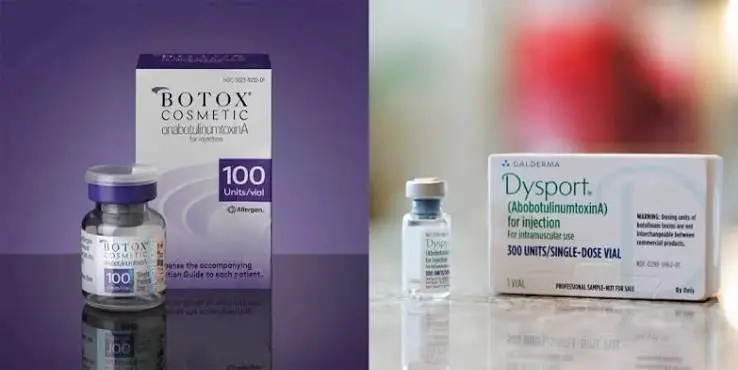
If you are considering injectable treatments to soften forehead lines or frown lines, you may be wondering whether Botox or Dysport is the better choice. Both are FDA-approved prescription treatments that temporarily relax targeted muscles to improve the appearance of certain facial wrinkles.
Although they work in a similar way, Botox and Dysport have different formulations, approved cosmetic indications, and dosing units. The best choice depends on your facial anatomy, treatment goals, and your provider's assessment.
At Naples Beauty Co. in Naples, Florida, we take an individualized approach to aesthetic treatments to help patients make informed decisions about their options.
What Is Botox?
Botox Cosmetic is a brand of botulinum toxin type A called onabotulinumtoxinA. It works by temporarily reducing the nerve signals that cause targeted muscles to contract.
When used appropriately, Botox Cosmetic can improve the appearance of certain expression lines, including frown lines between the eyebrows, forehead lines, and crow's feet. Its effects are temporary, so maintenance treatments may be needed to maintain results.
What Is Dysport?
Dysport is another prescription botulinum toxin type A treatment, known as abobotulinumtoxinA. Like Botox, it temporarily reduces activity in targeted muscles to soften the appearance of certain expression lines.
Dysport is FDA-approved for the temporary improvement of moderate to severe frown lines between the eyebrows in adults. Healthcare professionals may also use it in other areas when clinically appropriate; these uses may be off-label.
Both products can provide effective wrinkle reduction when selected and administered appropriately by a qualified healthcare professional.
Botox vs. Dysport: What Is the Difference?
Although Botox and Dysport have similar goals, there are several differences to understand.
1. How Quickly Do They Work?
Some patients notice changes from Dysport within a few days, while Botox results also commonly begin to appear within several days. Both treatments take time to reach their full effect.
The exact timeline varies with the treatment area, dose, injection technique, and individual response. A small difference in onset should not be the only factor when choosing a product.
2. How Long Do Results Last?
Both treatments provide temporary results. Many patients experience improvement for approximately three to four months, although duration can vary. Some patients may notice effects lasting longer or shorter periods.
Your provider can help determine an appropriate maintenance schedule based on your response and aesthetic goals.
3. Do They Look Different?
Neither product automatically creates a more natural or more frozen appearance. The result depends on factors such as facial anatomy, product selection, dose, placement, and the provider's technique.
A personalized treatment plan can help soften unwanted expression lines while considering how you want your face to move and look.
4. Are the Doses the Same?
No. Botox and Dysport use different product-specific units. Their units are not interchangeable and cannot be converted directly on a one-to-one basis.
For that reason, comparing the number of units alone can be misleading. Treatment plans should be based on the specific product being used and the area being treated.
5. Are They Priced Differently?
Pricing varies by practice, treatment area, amount of product used, and provider. Dysport may require a different number of units than Botox to treat a comparable area, so the price per unit alone does not tell you which treatment is more affordable.
Ask about the total estimated treatment cost and what is included in your appointment.
Which Is Better: Botox or Dysport?
There is no single answer for everyone. Both can be effective options for temporarily improving certain expression lines.
Your provider may consider:
- Which facial areas you want to treat
- Your facial muscle strength and anatomy
- Your previous response to injectable treatments
- Your desired degree of movement and wrinkle reduction
- Your medical history, medications, and treatment preferences
If you have used Botox before, that does not necessarily mean you must continue with it. Dysport may also be worth discussing, depending on your goals and clinical assessment.
The most important factor is choosing an appropriate treatment and having it administered by a qualified healthcare professional who understands facial anatomy and injectable safety.
What Are the Risks of Botox and Dysport?
Botox and Dysport are prescription treatments and are not risk-free. Common side effects may include temporary redness, swelling, bruising, tenderness, or headache.
Depending on the injection site, complications can include temporary eyelid or eyebrow drooping, unwanted changes in facial expression, or asymmetry. Rarely, botulinum toxin effects may spread beyond the injection area and cause serious symptoms, including difficulty swallowing, speaking, or breathing. Seek immediate medical attention if these symptoms occur.
Tell your provider about your medical history, previous reactions to botulinum toxin, neuromuscular conditions, medications, and any infection near the intended injection site. Treatment may not be appropriate for everyone.
A consultation should include a discussion of potential benefits, risks, alternatives, and realistic expectations.
Botox and Dysport at Naples Beauty Co.
At Naples Beauty Co. in Naples, Florida, we believe aesthetic treatments should be tailored to each patient's features and goals. Whether you are considering Botox, Dysport, or another option, we can discuss the differences and help determine which treatment may be appropriate for you.
Ready to explore your options? Contact Naples Beauty Co. to schedule a consultation and discuss a personalized treatment plan.
Important Information
This article is for educational purposes only and does not replace individualized medical advice. Botox and Dysport are prescription medications that should be administered by appropriately trained and licensed healthcare professionals. Results vary, and all injectable treatments carry potential risks.